


Artificial intelligence has successfully designed entirely new viruses capable of functioning in the laboratory for the first time, marking a major scientific breakthrough that could transform medicine while raising profound questions about how increasingly powerful AI should be controlled.
What's Happened?
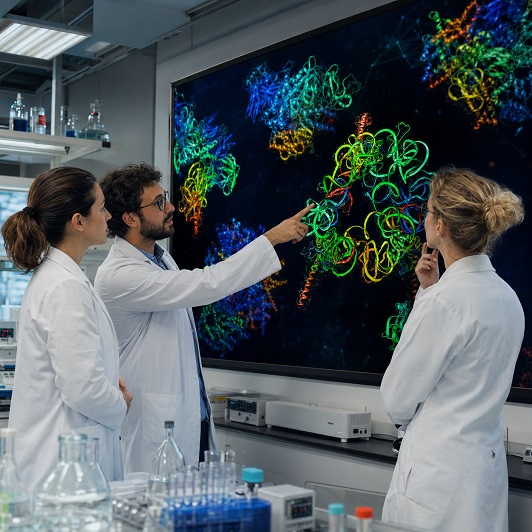
Researchers at Stanford University have used a generative AI model called Evo 2 to create completely new viral genomes that were later synthesised and tested in the laboratory.
Rather than modifying existing viruses, the researchers asked the AI to generate entirely new versions of bacteriophages, viruses that infect bacteria rather than people. Out of nearly 300 AI-designed genomes that were created and tested, 16 proved highly effective at infecting and killing E. coli bacteria, demonstrating that the AI had learned the underlying biological principles needed to produce functional viruses rather than simply copying existing examples.
The achievement represents the first successful demonstration of generative AI designing complete viral genomes capable of replication.
As Stanford chemical engineering professor Brian Hie explained: "In this case, we wanted the model to generate the entire genome end-to-end in a single left-to-right pass. We didn't add anything."
The researchers also reported that "a few of Evo's suggestions had higher fitness than the native ΦX174", meaning some AI-designed viruses actually outperformed the naturally occurring virus on which the work was originally based.
How Did AI Learn To Design Viruses?
The technology works in much the same way as large language models such as ChatGPT, although instead of predicting words, Evo 2 predicts DNA sequences.
The model was trained using vast quantities of genetic information from bacteria, viruses, plants and animals, enabling it to recognise the patterns and relationships that evolution has encoded into DNA over millions of years.
For this study, the researchers focused on ΦX174, a relatively simple bacteriophage (a virus that infects bacteria) containing fewer than 6,000 DNA base pairs. Starting with only a small fragment of the original genome, Evo 2 generated thousands of entirely new genetic sequences, each representing a possible virus.
Graduate researcher Samuel King then developed a computational framework to evaluate the AI's designs before selecting the most promising candidates for laboratory testing.
King explained: "The framework involved several key steps: generating genomes using Evo 2, evaluating options based on the design criteria, selecting optimal candidates, synthesising them chemically, and then testing them in the lab to see which genomes worked best."
The laboratory results confirmed that several of the AI-generated viruses functioned exactly as intended.
Why This Could Transform Medicine
Although designing new viruses may initially sound pretty alarming, the immediate goal is actually to develop new treatments for bacterial infections that no longer respond to conventional antibiotics. These include serious drug-resistant infections such as MRSA and certain strains of E. coli, which the World Health Organisation identifies as among the world's most urgent public health threats.
Bacteriophages naturally attack bacteria while leaving human cells unaffected, making them increasingly attractive as antibiotic resistance becomes a growing global health challenge.
Rather than relying on a single virus, the Stanford team believes AI could design collections of genetically diverse bacteriophages that work together, making it much harder for bacteria to evolve resistance.
As Hie explained: "If the bacteria gain resistance to a single phage, it's game over for the medication. But if you have multiple genetically distinct phages in a mixture, it would be harder for the bacteria to develop resistance to the entire cocktail."
The researchers also believe the same AI techniques could eventually help develop beneficial engineered microbes capable of producing medicines, chemicals and sustainable fuels.
One of the most significant aspects of the project is that Evo 2 has been released as open-source software, allowing researchers around the world to build on the work and accelerate scientific progress.
Safety Questions
The breakthrough has also prompted serious discussion about biosafety and biosecurity.
Although the Stanford team deliberately limited the research to bacteriophages that infect bacteria, the study demonstrates that AI is beginning to acquire the ability to write entirely new biological genomes.
That capability has prompted concern among biosecurity experts about how similar technologies could eventually be applied to organisms capable of infecting people if appropriate safeguards are not maintained.
Writing in an accompanying commentary published alongside the research in Science, Dr Thomas Inglesby and Dr Moritz Hanke from the Johns Hopkins Center for Health Security said the work raises "urgent biosafety and biosecurity questions".
They argued that the debate is no longer whether AI-generated viral design will become possible, but whether it can be developed "without enabling serious harm".
Stanford's researchers acknowledge those concerns but argue that AI also offers powerful new ways to defend against naturally occurring diseases.
As Hie said: "AI-enabled tools like Evo 2 provide humans a powerful advantage against naturally occurring pandemics and improved defence options against man-made biological threats."
The team also points out that safeguards can be built into AI systems, whereas naturally evolving pathogens cannot be controlled in the same way.
A New Era For Synthetic Biology?
Perhaps the most important aspect of this research is what it reveals about AI itself.
For example, until recently, generative AI has largely been associated with producing text, images, software and video. This study demonstrates that AI is now beginning to design entirely new biological systems capable of functioning in the real world. Rather than simply analysing existing biology, AI is starting to participate in creating it.
As Professor Marc Güell of Pompeu Fabra University observed, this is "a very significant turning point" because "for the first time in history, we are beginning to design biology on a computer."
Professor Patrick Cai of the Manchester Institute of Biotechnology described the work as "an important milestone", adding that it "suggests that genome language models are beginning to learn the design principles encoded by evolution, opening the door to AI-assisted genome writing."
What Does This Mean For Your Business?
For businesses, the research highlights how artificial intelligence is rapidly expanding beyond digital applications into biotechnology, pharmaceuticals and advanced scientific research. Organisations operating in healthcare, life sciences, agriculture and biotechnology may soon find AI becoming an increasingly important tool for designing new medicines, developing sustainable manufacturing processes and accelerating scientific discovery.
The study also reinforces the growing importance of AI governance. Technologies capable of designing entirely new biological systems offer enormous potential benefits, although they also require equally sophisticated oversight to ensure they are developed responsibly. Businesses working with advanced AI should therefore expect increasing scrutiny around risk management, security controls and ethical governance as regulators seek to balance innovation with public safety.
Perhaps most importantly, this breakthrough illustrates that AI is beginning to move beyond generating information towards generating entirely new biological realities. While today's AI-designed viruses infect only bacteria and may ultimately help solve one of medicine's biggest challenges, the achievement demonstrates just how quickly AI capabilities are advancing into areas that were once considered the exclusive domain of human scientific expertise.